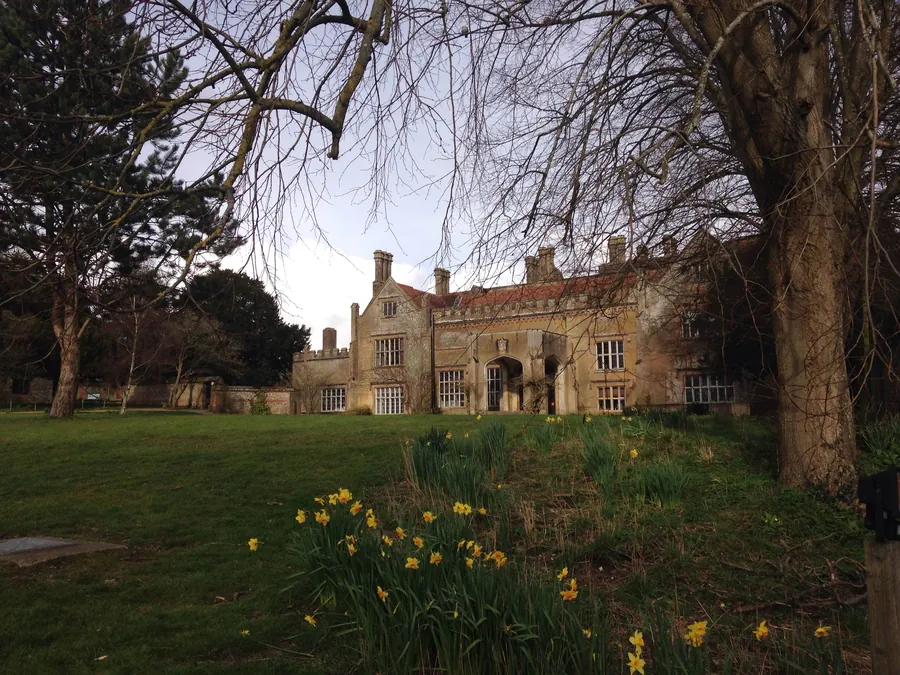
Marwell Zoo occupies 140 acres of parkland at Colden Common, eight kilometres south of Winchester, around the grounds of Marwell Hall.
It holds over 500 animals of 145 species, and it is owned and run by the registered charity Marwell Wildlife, whose conservation and education work has a particular focus on Africa — field projects in Kenya and elsewhere alongside the collection here.
African plains species are the strength: giraffe, zebra — including the endangered Grévy’s zebra, in which Marwell has a long-standing conservation involvement — scimitar-horned oryx, antelope, ostrich and rhino in large paddocks.
Big cats — snow leopards, cheetah and tigers.
Primates — gibbons, lemurs and others.
Penguins, meerkats, red pandas, okapi, giant anteaters and a tropical house.
Energy for Life, a large tropical house heated by a biomass boiler as part of the zoo’s sustainability programme.
Talks, feeds and keeper sessions through the day.
A road train circles the site, which matters — see below.
140 acres is a lot of walking, and this is the thing to plan for.
The enclosures are well spaced out, which is good for the animals and means real distances between them. Visitors with small children, or anyone who does not walk far, should use the road train, and everyone should expect the site to take longer than a compact zoo.
Time: a full day. Four to six hours is typical.
Reviews of Marwell divide more than at most British zoos, and it is worth reporting both sides.
The majority view is positive: animals that appear well cared for, good-sized enclosures with greenery and cover, plenty of space, a pleasant walk through parkland, and a genuine conservation charity behind it. Season-ticket holders visit repeatedly through the year, which is its own verdict.
The criticisms are real and are worth knowing. Some visitors — particularly in hot, dry summers — find certain enclosures bare and short of shade, especially the plains paddocks, and consider them small for the animals in them. In dry years the grass burns off and the paddocks look considerably worse than they do in spring.
Animals are not always visible. Enclosures close for work, some species are indoors or out of sight, and visitors who came specifically for one animal sometimes leave disappointed.
Go for the collection as a whole, ideally in spring or autumn rather than the height of a dry August, and use the talks timetable.
Admission charged; online booking is cheaper, and an annual pass is good value if you are local or returning.
Time: a full day.
Facilities: several cafés — the Keepers café is well liked — picnic areas, shops, toilets, baby changing.
Parking: free and large.
Access: the site is large and largely level with surfaced paths; the road train helps with distances.
Weather: almost entirely outdoors, with a few indoor houses. Dress for a day outside.
Play areas across several age bands.
Thompson’s Lane, Colden Common, off the B2177 between Winchester and Bishop’s Waltham — about fifteen minutes from Winchester by road, signposted.
140 acres, with over 500 animals of 145 species. It involves a lot of walking.
Yes, a road train circles the zoo, which is worth using with small children or over long distances.
A full day — four to six hours is typical.
Some visitors find certain enclosures bare and short of shade, particularly in hot dry summers when the grass burns off. Spring and autumn show the site much better.
Yes — Marwell Wildlife, with conservation and education programmes focused particularly on Africa.