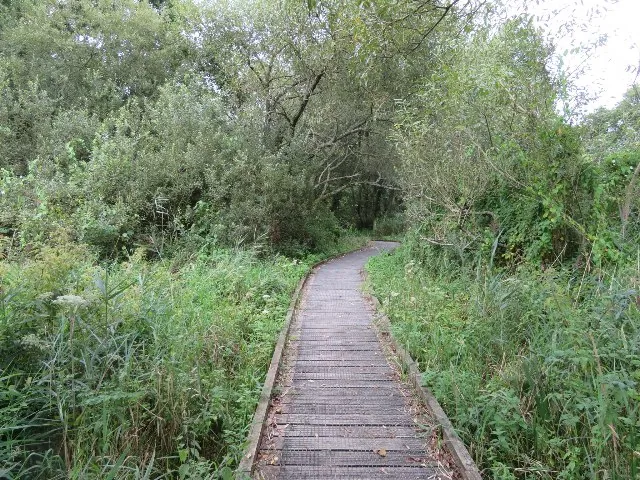
Winnall Moors is a 64-hectare — 160-acre — nature reserve on the River Itchen, immediately north-east of Winchester city centre.
The southern section is owned by Winchester City Council and has been managed by the Hampshire and Isle of Wight Wildlife Trust since the 1980s; the northern section is a wilder area with restricted access.
The remarkable thing about it is the location. The entrance at Durngate is a four-minute walk from the High Street, and within a hundred metres of it you are in water meadow with no sound of the city at all.
The Itchen is one of the world’s chalk streams — spring-fed, alkaline, exceptionally clear, and constant in temperature and flow.
There are perhaps 200 chalk streams in the world and around 85 per cent of them are in southern England, which makes them one of the rarest habitats Britain holds. They support brown trout, grayling, water crowfoot, mayfly and a specific and unusual assemblage of invertebrates.
At Winnall the river runs in several channels — the natural course, the carriers of the old water meadow system, and the mill leats. Visitors who like rivers spend a long time here working out which is which, and the answer is that they are all the Itchen.
The water meadows were an engineered agricultural system: from the seventeenth century, the river was deliberately spread across the meadows in winter through a network of channels and hatches to keep the grass frost-free and produce early grazing. The earthworks are still visible.
Dragonflies and damselflies in abundance from June to August — this is one of the reserve’s specialities and visitors consistently remark on the numbers.
Butterflies in the meadows.
Birds — reed and sedge warblers, reed bunting, kingfisher, little egret, water rail, and in winter snipe and wildfowl. The reedbeds are the reason.
Water voles — Winnall is one of the better sites in Hampshire for them.
Otters are present on the Itchen.
Brown trout and grayling visible in the clear water.
Boardwalks and surfaced paths run through the southern reserve on a circuit of about a kilometre and a half, taking thirty to forty-five minutes.
The paths are described as very well kept, and the boardwalk sections make the wettest areas passable.
There are hides and viewing points, and interpretation along the route.
It is genuinely one of the best short walks in any English city — a wild wetland in the middle of a cathedral town, and almost always quiet.
Free to enter.
Time: thirty to forty-five minutes; longer if you stop to watch.
Location: Durngate Place, four minutes’ walk from the High Street.
Parking: a reasonably priced car park at Durngate, which visitors specifically mention.
Facilities: none in the reserve. The city is immediately outside.
Access: the southern circuit uses boardwalks and surfaced paths and is largely manageable.
Dogs: restrictions apply in parts of the reserve — check the signs at the entrance.
Season: June to August for dragonflies; spring for warblers; winter for wildfowl and the structure of the meadows.
The Itchen Navigation and riverside paths run south through the city.
Winchester City Mill, National Trust, is five minutes downstream.
Abbey Gardens and King Alfred’s statue are five minutes away.
St Catherine’s Hill and the water meadows to St Cross are the longer walk, south of the city.
Four minutes’ walk from the High Street, at Durngate Place.
Yes. The car park at Durngate is charged but reasonably priced.
A spring-fed, alkaline, exceptionally clear river. There are around 200 in the world and about 85 per cent of them are in southern England.
Dragonflies and damselflies in numbers in summer, warblers, kingfishers, water voles, trout and grayling in the clear water.
The southern circuit uses boardwalks and surfaced paths and is largely manageable.